04.15.2026
« Return to NewsThe Shutdown Didn’t End When Pay Resumed
What the 2026 Government Shutdown Revealed About Financial Stress
At 5:30 a.m., a Coast Guard civilian employee in Houston gets ready for work.
He helps direct vessel traffic in one of the busiest energy ports in the world, responsible for $1 trillion in economic activity each year. The Houston port system depends on him being sharp, focused, and present.
However, he hasn’t received a paycheck for over five weeks.
His mortgage payment is due, his car needs gas, and his family is struggling to make it through another week and put food on the table.
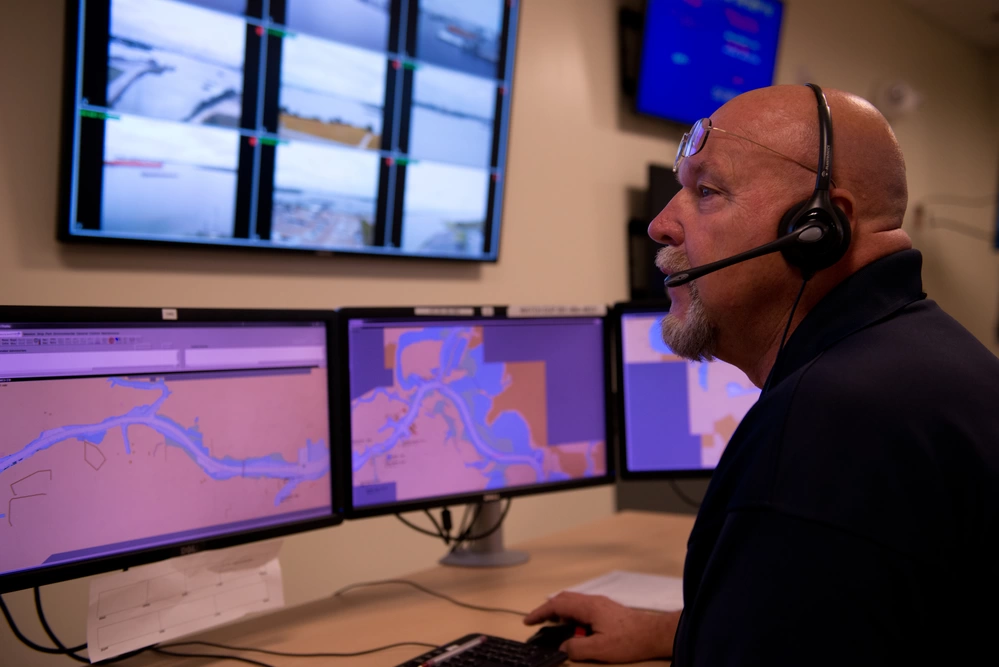
Yet, he goes to work anyway.
That story played out across the Coast Guard’s workforce for weeks after the 2026 Government Shutdown left thousands of civilian employees in the Department of Homeland Security without pay during the longest partial lapse in appropriations in U.S. history. This included more than 8,000 civilians in the Coast Guard.
By the time an executive order restored pay, Coast Guard Mutual Assistance, a national nonprofit exclusively serving the Coast Guard community, had received more than 700 requests for support for Coast Guard civil servants, totaling over $2.3 million. The Coast Guard’s official relief society delivered more than $1.7 million in assistance to help families bridge the gap.
What CGMA saw wasn’t just a financial shortfall. It was the start of something deeper.
This was about survival

The most common requests weren’t surprising, but they were telling.
Families weren’t asking for help with discretionary expenses. They were trying to hold onto the basics: rent and mortgage payments, utilities, food, transportation, and childcare.
These weren’t financial trade-offs. This was survival.
“When people think about financial hardship, they often think about cutting back,” said Brooke Millard, CEO of CGMA. “That’s not what we saw. Families were struggling to get the basics. When those are at risk, everything else is secondary.”
As the shutdown dragged on, requests increased in both volume and complexity. What started as concern became sustained strain across the workforce.
From Household Stress to Mission Risk
As the weeks passed and much of the public attention was on airport screening times, the fight for survival escalated from the homefront to the frontlines.
Civilian employees at Vessel Traffic Centers, responsible for safely managing maritime traffic in the nation’s busiest ports, faced increasing financial pressure. In at least one case in the San Francisco Bay Area, nighttime operations were suspended, leaving vessel operators to navigate without Coast Guard assistance.
After roughly four weeks, Coast Guard Child Development Centers were at risk of closing as employees struggled to afford transportation. Such closures would have crippled operations across major Coast Guard hubs.
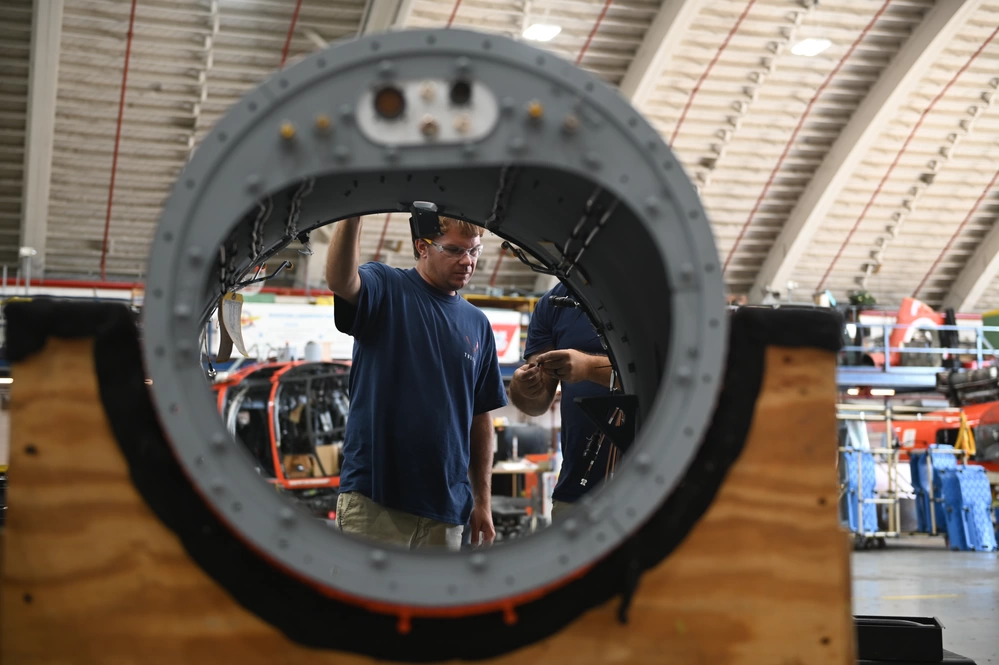
At the Coast Guard Aviation Logistics Center, employees worked full days, took on part time jobs to pay rent, and still turned to food banks to feed their families.
These examples were not isolated. They reflect what CGMA heard day in and day out as requests for assistance surged.
“When our workforce is worried about how they’re going to pay their bills or feed their families, they can’t fully focus on the mission,” Millard said. “Financial stress doesn’t stay at home. It follows people to work and affects mission readiness.”
Operations may continue during a shutdown, but not without added risk to public safety, economic prosperity, and national security.
Civil servants in the Coast Guard perform highly specialized roles that are critical to mission execution: intelligence, IT, acquisitions, acquisitions, maintenance, and logistics. These are not easily replaced positions, and when that workforce is strained, the effects are immediate and difficult to recover from.
The Coast Guard faced two overlapping pressures: civilians who were not being paid, and military members who were unsure if they would be. Both introduced financial stress that will likely shape behavior long after the shutdown ended.
When viewed together, broader patterns emerged.
The greatest needs surfaced in regions with the highest concentration of civilian employees supporting Coast Guard operations and the maritime transportation system.
Washington, Virginia, Maryland, West Virginia, North Carolina, and the San Francisco Bay Area stood out as regions where civilian employees are not peripheral to the mission, but essential to its execution. When this workforce is strained, the impact extends beyond individuals to operational continuity and maritime safety.
For instance, nearly the entire workforce of the U.S. Coast Guard National Maritime Center in West Virginia was furloughed, creating a backlog of approximately 16,000 merchant marine credentials, according to testimony by Adm. Thomas Allan, Vice Commandant of the U.S. Coast Guard.
The concentration of support also highlights a critical vulnerability: limited resilience in key operational nodes when civilian workforce pay is disrupted.
The Compounding Effect
For many Coast Guard families, this wasn’t the first disruption. It was the second prolonged shutdown in less than a year.
As of April 13, the Coast Guard has been operating without appropriations for approximately 60 consecutive days. Combined with the 43-day shutdown in 2025, the service has been in shutdown conditions for more than 100 days—more than half of the fiscal year. For the workforce, that no longer feels temporary. It feels like instability.
Meanwhile, some families were still repaying loans. Others had already depleted savings from 2025. Many described this shutdown as “feeling different,” marked by greater uncertainty, more stress, and less clarity.
We saw that reflected in behavior.
Requests for debt management support increased significantly. Families who had previously managed through disruption had less margin this time.
In one case, a civilian employee was days away from losing their home and required substantial support to remain housed. The employee initially resisted taking on another loan after borrowing during the 2025 shutdown. Waiting only worsens the situation.
This is how financial stress compounds into financial trauma, repeated disruptions that erode stability over time.
Uncertainty was a Real Stressor
Active Duty members ultimately continued to receive pay. But in the early stages of the shutdown, they didn’t know if they would.
That uncertainty spread quickly.
Servicemembers and their families began preparing for a potential loss of income—seeking information, asking questions, and initiating requests for assistance before any paycheck was missed.
“The issue wasn’t lost income. It was uncertainty,” said Jason Wong, COO of CGMA. “When pay becomes uncertain, people begin to prepare for the worst. That kind of stress shows up in different ways across families and the workforce.”
CGMA received hundreds of preemptive requests from service members and their families. These requests largely focused on basic needs such as food, housing, and utilities.
Uncertainty, in many cases, spread faster than the financial impact itself.
More Than a Temporary Disruption
Government shutdowns are often described as temporary interruptions.
That was not what CGMA observed.
Families approached the edge of losing their homes. Employees worked multiple jobs and still struggled to make ends meet. Stress increased across households. Some highly skilled professionals began reconsidering their future in federal service.
“This wasn’t just a financial event,” Wong said. “It was a behavioral one. You could see how quickly people shifted from planning for the future to just trying to get through the week or even the day.”
That shift does not immediately reverse when pay resumes.
Recent federal workforce data reinforces what CGMA observed. According to the Office of Personnel Management’s Federal Employee Viewpoint Survey, employee engagement and intent to remain in federal service have declined in recent years, alongside concerns about morale and workplace satisfaction.
Events like prolonged shutdowns do not occur in isolation. They compound existing pressures and accelerate underlying trends.
A Workforce Signal, Not Just a Moment
What CGMA observed during the shutdown was not just a short-term crisis. It was a signal.
Repeated financial disruption introduces doubt into a workforce that relies on stability, trust, and long-term commitment.
When highly skilled employees begin to question whether they can rely on consistent pay, the effects extend beyond individual households. Retention becomes fragile. Recruiting becomes more difficult. Engagement declines.
The Coast Guard, and the broader federal government, depend on a workforce that is highly trained, mission-driven, and difficult to replace. Many of these roles require years of experience and specialized expertise.
“When you introduce uncertainty around something as fundamental as pay, you’re not just creating financial stress,” said Millard. “You’re introducing doubt. And over time, that doubt affects whether people stay, how they perform, and whether others choose to join.”
The next phase of the shutdown response is not just recovery. It’s prevention. Preventing financial disruption from becoming a long-term workforce challenge.
What Happens Next
Pay may have resumed, but the effects will linger for years to come.
For many families, recovery will take time: rebuilding savings, paying down debt, and restoring stability.
For others, the experience has already changed how they view government service.
For some, that change includes a loss of confidence and trust in the systems they depend on. In those moments, organizations like CGMA remain a constant, providing support when it is needed most.
Financial disruption may be unavoidable. Sustained financial instability is not.
“CGMA exists to meet families in these moments,” Millard said. “But long-term resilience requires something more: awareness, early support, and leaders who understand the lasting impact financial trauma can have on the workforce.”
Because when financial stability erodes, so does readiness.
And when we take care of our people, we strengthen the entire service.